Volcanoes National Park
Front row seat to nature's biggest show
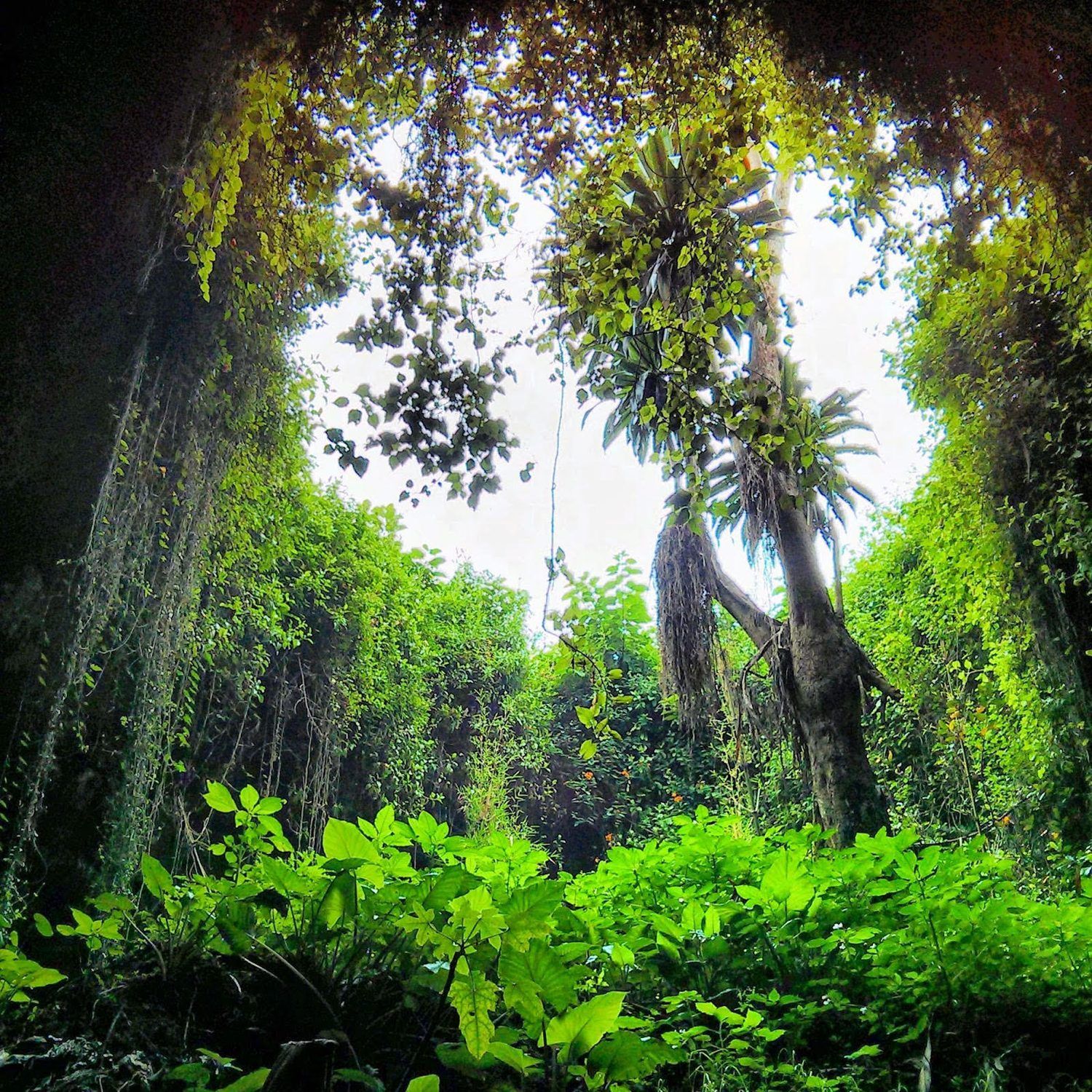
Volcanoes National Park Rwanda: Where You Find What You Didn't Know You Were Missing
Hotel California for your soul
You can visit Volcanoes National Park any time you like. But you can never leave.
Not because you're trapped. Because part of you stays there forever. In the bamboo forests at 3,000 meters. In the volcanic mist rolling through Hagenia trees. In the moment a silverback gorilla looked directly at you and every manufactured importance you'd attached to yourself dissolved.
This isn't another safari. This is one of nature's greatest shows.
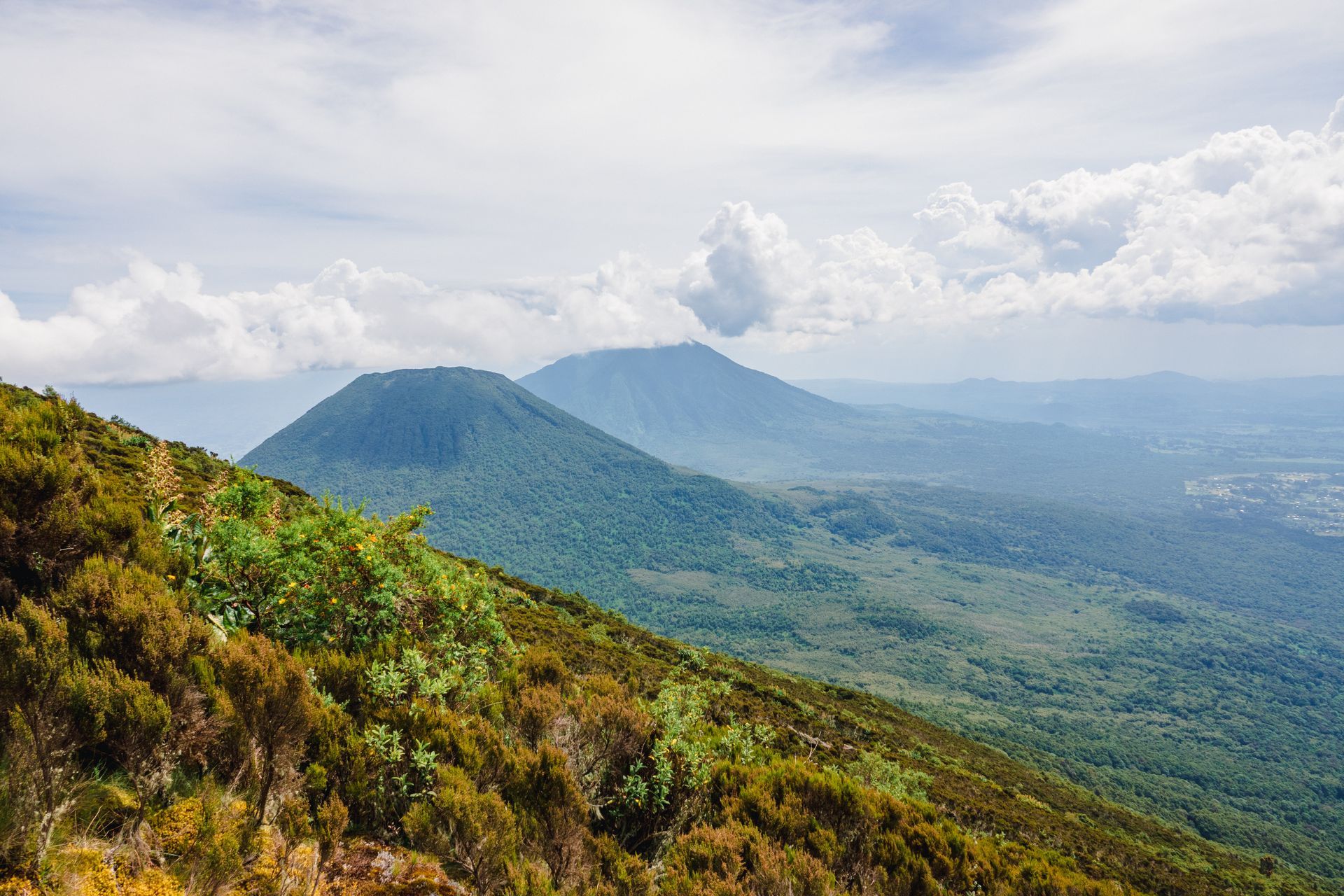
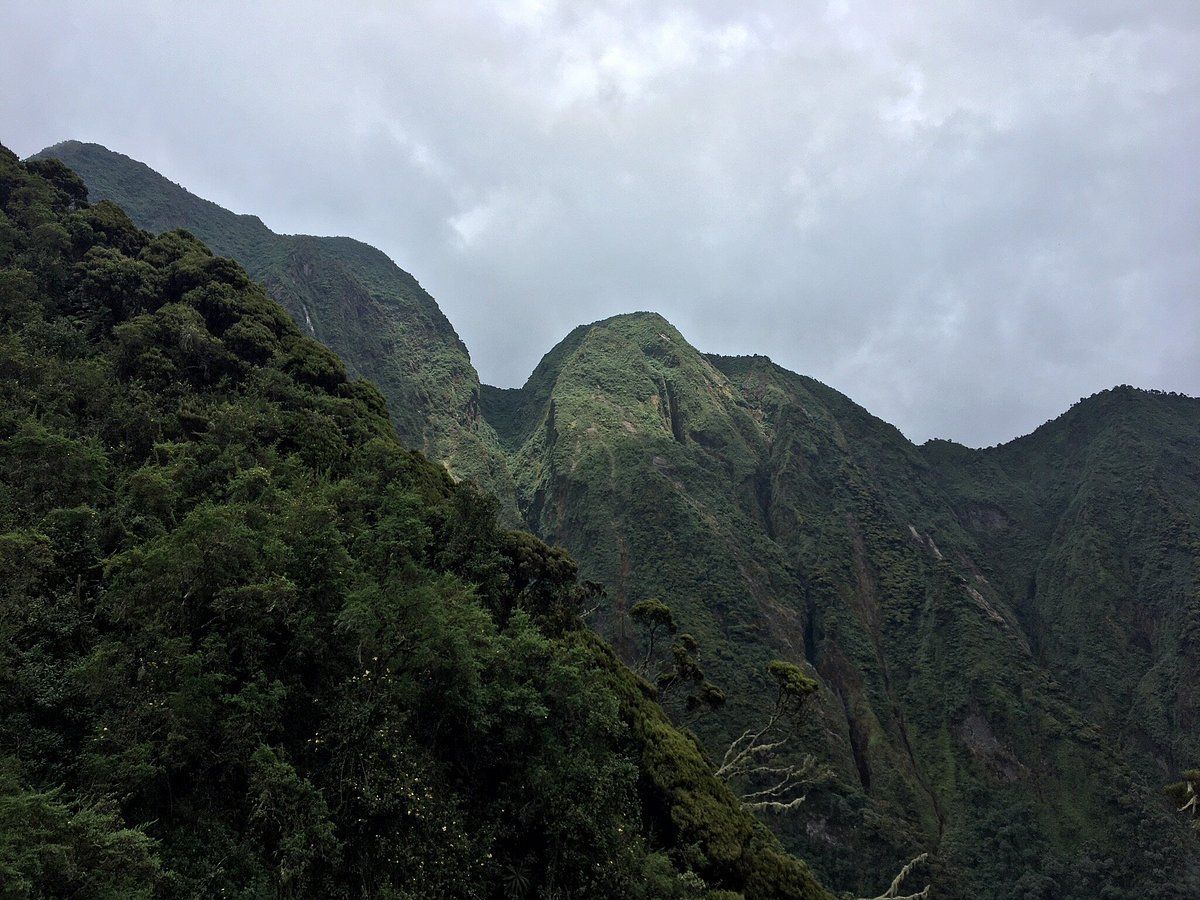
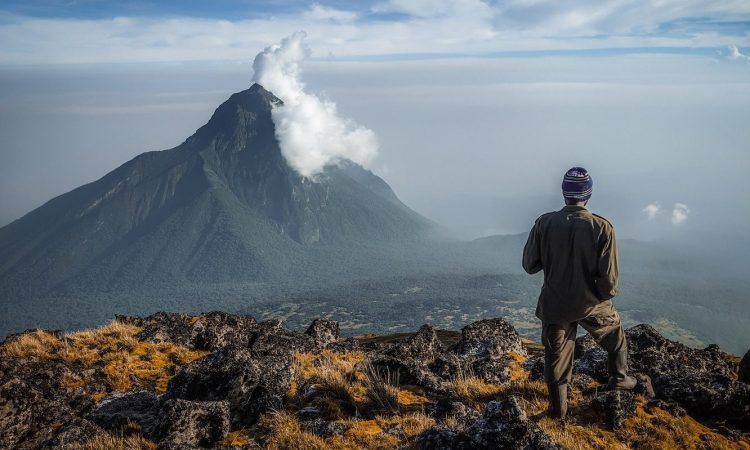
The mountain gorillas are the icing on the cake—but you can't separate the primates from their otherworldly habitat. The uniqueness of the mountain gorillas and the landscape they inhabit feels like a trip to another planet, not just another country. The volcanic peaks rising through cloud forest. The bamboo thickets so dense you cut paths with machetes. The altitude that makes your lungs work harder while your mind goes somewhere it's never been.
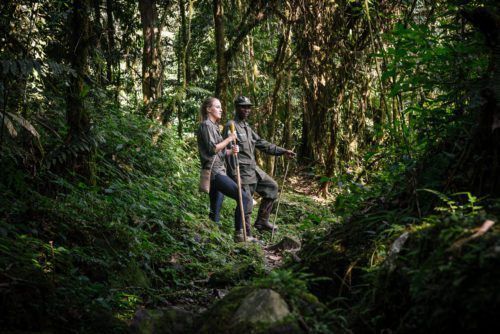
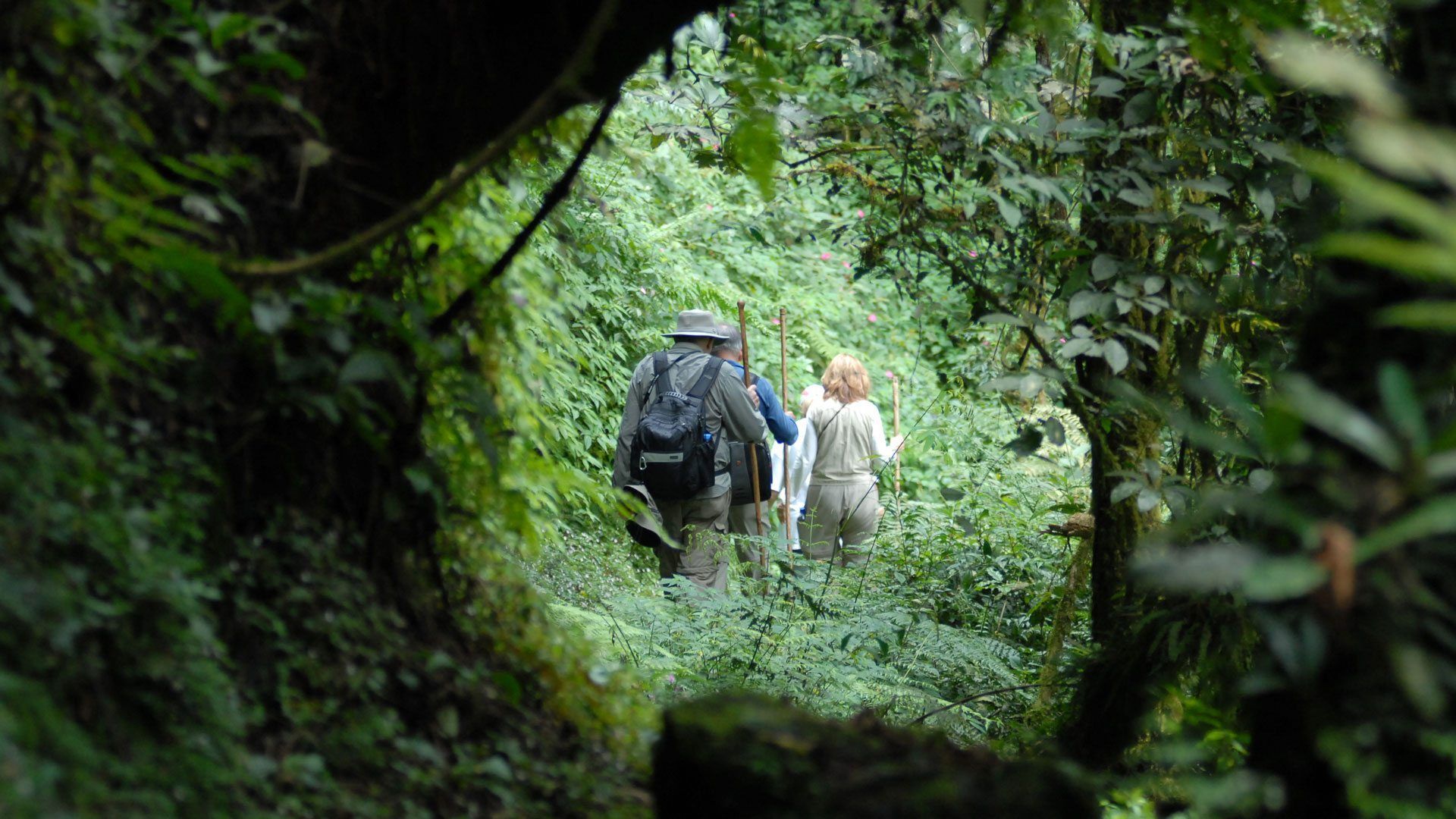
Watch trekkers ascending through Volcanoes National Park and you'll see it immediately: deep thought with every step. Faces lost in contemplation. Something about this place—the effort, the altitude, the ancient forest, the isolation from everything digital and urgent—unlocks parts of your brain you've never explored before. The scenery provokes you to think thoughts you've never heard before.
The most common thing trekkers think and voice with every step: "We have it all upside down. Somewhere we got it all wrong."
This isn't philosophical tourism. It's involuntary. The Virunga Mountains don't ask permission to rewire how you see the world. Your senses come alive—not sharpened, but fundamentally recalibrated. The smell of earth and vegetation and altitude. The sound of complete silence interrupted only by your breathing and footsteps. The visual overload of forty shades of green you didn't know existed.
Hikers who explore the park without tracking gorillas will leave feeling like they didn't reach the inner sanctum of this sanctuary. They remain in deep thought until they exit, carrying that contemplative state back into normal life like a secret.
But for trekkers tracking gorillas, everything changes the moment you come face to face with a mountain gorilla family.
All your thoughts go blank.
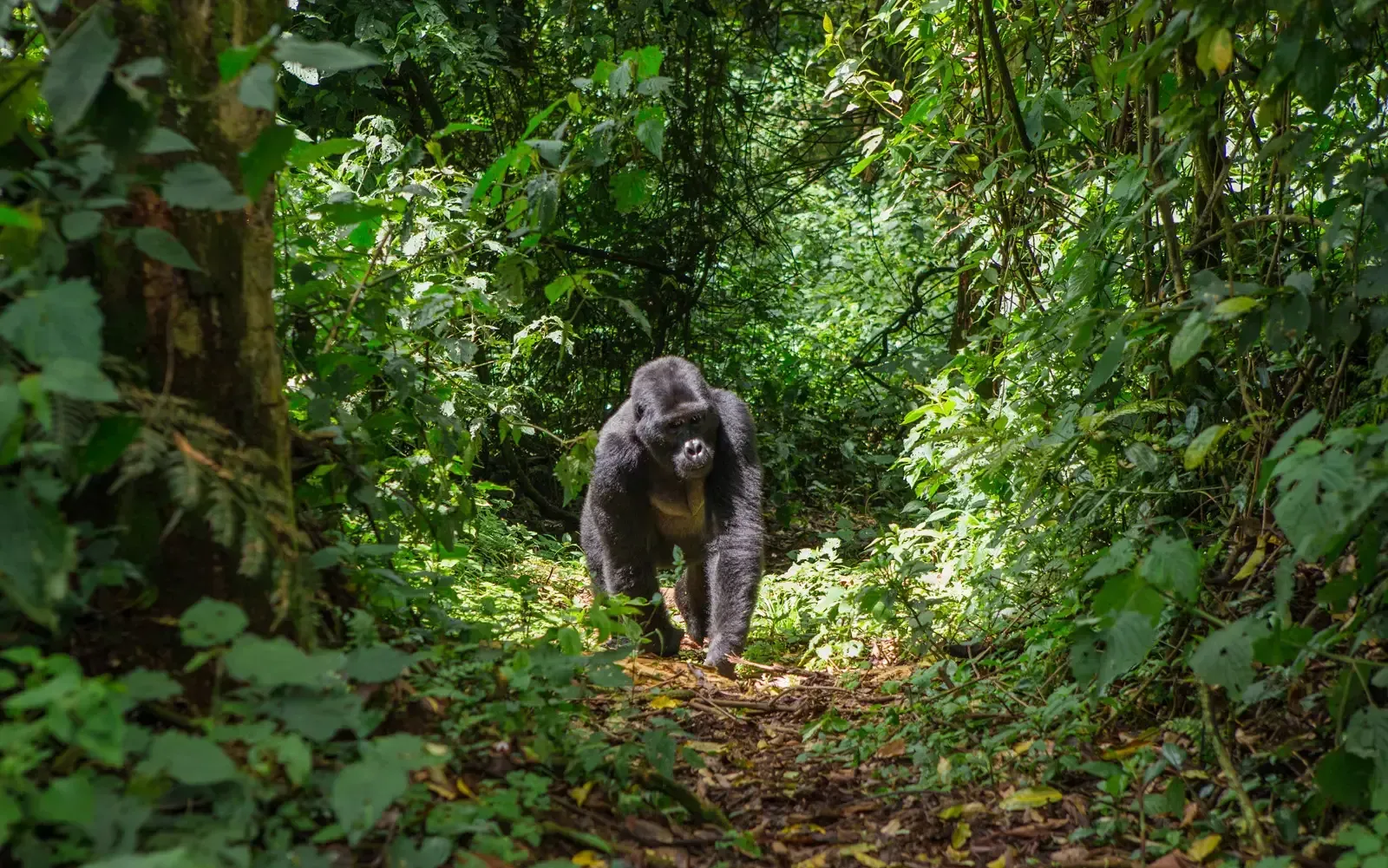
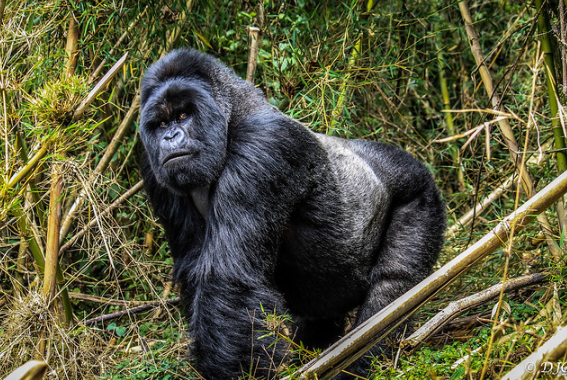
You can't think of anything else standing next to the majestic presence of a silverback. It overwhelms the senses completely. You are immediately humbled in their presence—no matter who you are, no matter what importance you've attached to yourself, it all disappears in that moment.
It's a homecoming. You feel grounded. And in the calmness of the situation, where time feels like it has stopped, the only interruption is the sound of twigs and bamboos crackling as their playful youngsters swing past you—sometimes within arm's reach, sometimes directly overhead, completely indifferent to your presence while you're completely transfixed by theirs.
The official allocation is one hour with a mountain gorilla family. That hour lasts a lifetime.
As you trek back down the mountain, you literally feel shivers going down your spine. The dopamine rush rivals your best orgasm. The look on trekkers' faces can only be described as afterglow. Everyone's face carries the same expression—something between euphoria and disbelief and fundamental transformation.
There's a phenomenon you'll witness as people exit Volcanoes National Park: they look like they're emerging from a sensory deprivation tank, slowly adjusting back to the world they're accustomed to. The only difference is their senses weren't deprived—they were overwhelmed with sensations they've never experienced before and will never fully explain to anyone who hasn't stood there.
This is why Volcanoes National Park is Hotel California for your soul. You can check out any time you like. But you can never leave. Part of you stays in those mountains forever.
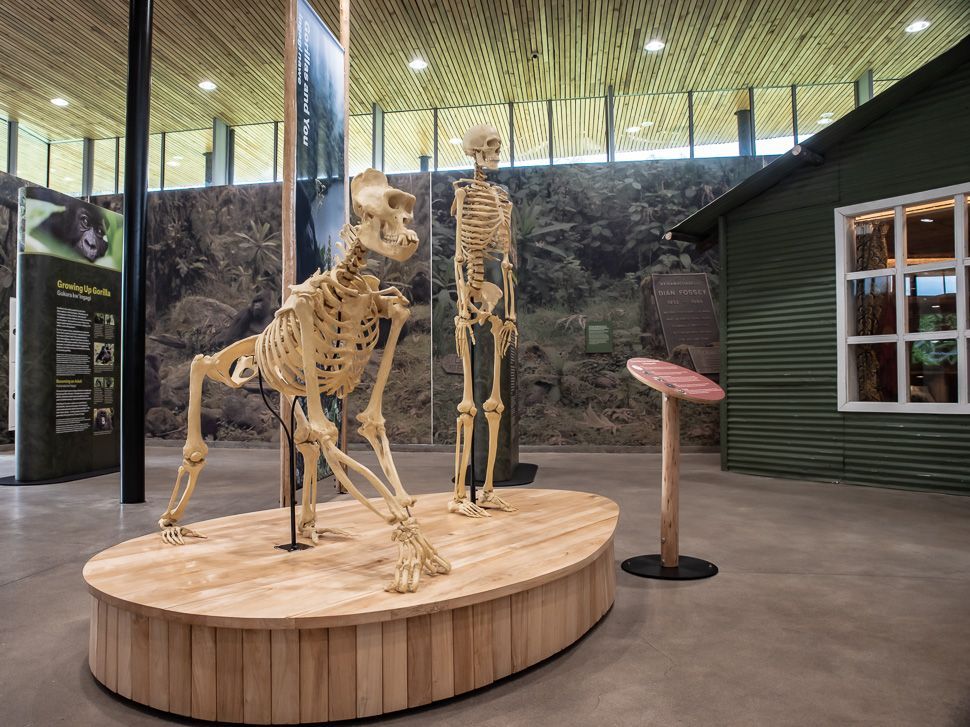
Dian Fossey understood this. She arrived in 1967 to study gorillas for a few months. She stayed eighteen years. She's buried there, next to Digit, her favorite gorilla, at 3,000 meters between two volcanoes. She never left because she couldn't. The Virungas claimed her the way they claim everyone who goes deep enough.
Akagera National Park:
Where Every Animal Is a Comeback Story.
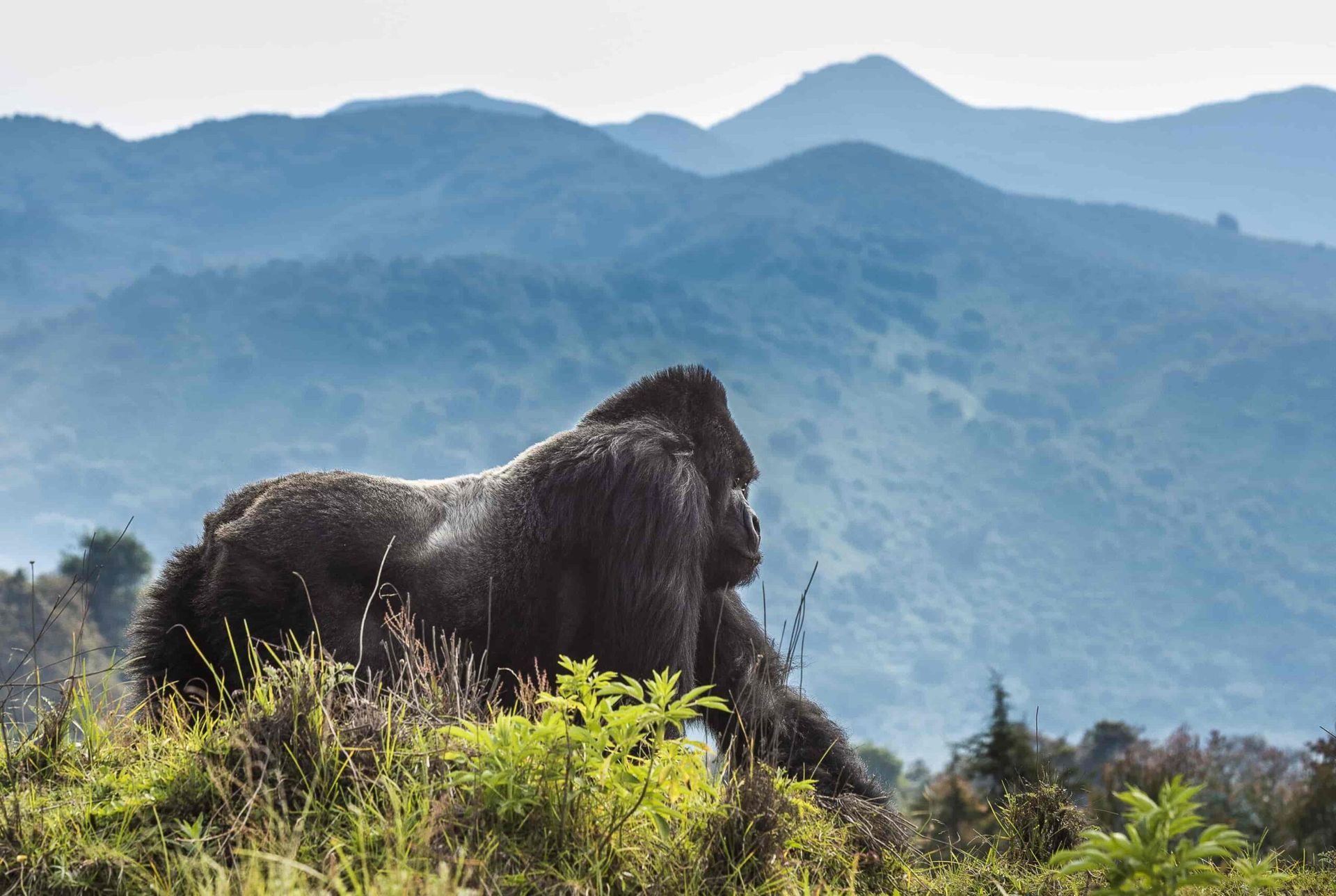
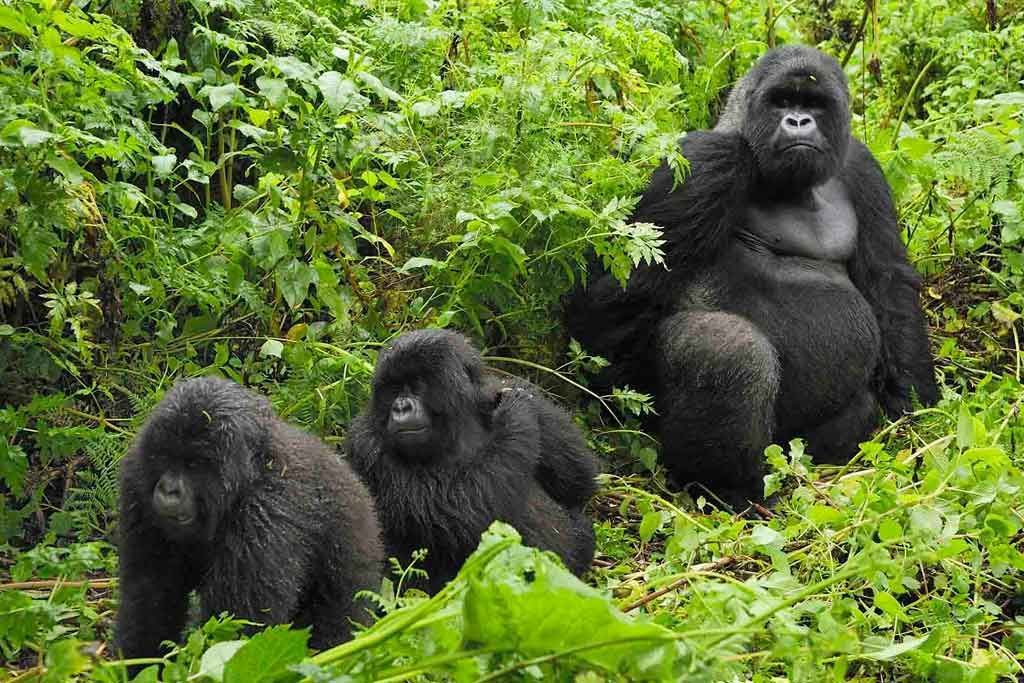
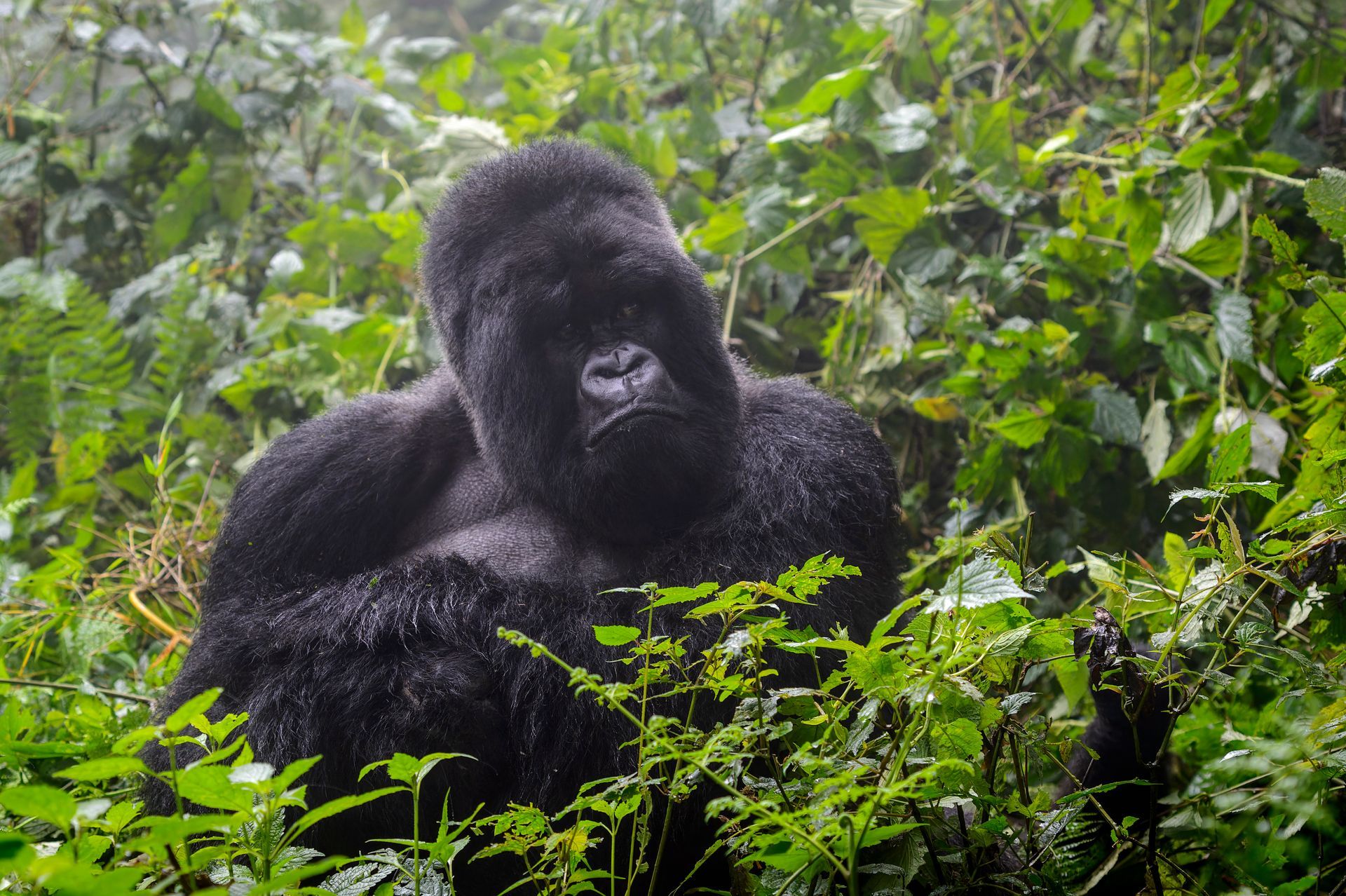
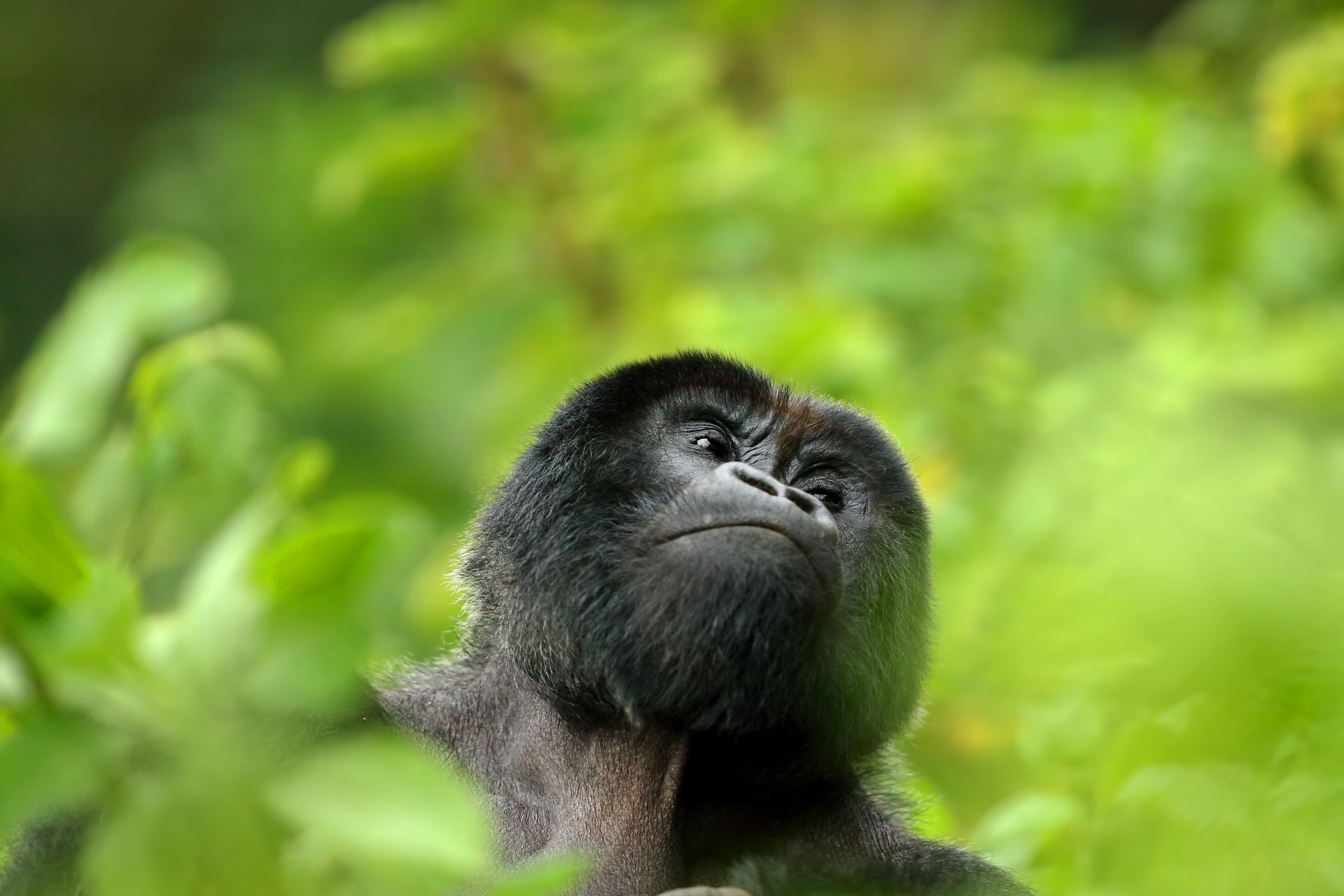
Mt. Gorilla Trekking the Tranformation
Volcanoes National Park protects 12 habituated mountain gorilla families—each with distinct personalities, hierarchies, and home ranges across five volcanic slopes. Some families range high into the mountains requiring serious climbs. Others stay lower, offering easier access. You don't choose which family you visit—park authorities assign groups based on your fitness level and current gorilla locations.
What Makes Each Trek Different
Susa Family (38 members) climbs high into Mount Karisimbi's slopes—the park's most challenging trek but rewards with rare twins and some of Dian Fossey's original study subjects. Sabyinyo Family (19 members) led by powerful silverback Guhonda offers easier access, ideal for first-timers or those with limited mobility. Amahoro Group (23 members) lives up to its name ("peace" in Kinyarwanda)—calm, gentle, steep climb but worth every step for the family's serene temperament.
The other nine families—Karisimbi, Agashya, Kwitonda, Umubano, Hirwa, Bwenge, Ugenda, Muhoza, and Igisha—each tell different stories of mountain gorilla social dynamics, territorial ranges, and conservation success. For complete family profiles and current locations, visit volcanoesnatpark.com.
The Reality of Gorilla Trekking
7:00 AM briefing at park headquarters in Kinigi. Rangers assess fitness, explain protocols, assign families based on ability and gorilla locations tracked since dawn.
Trek duration: 30 minutes to 6 hours depending on where your assigned family spent the night. Trackers left at dawn radio coordinates—you're following real-time intelligence, not wandering blindly.
Terrain: Steep volcanic slopes (2,500-4,000m altitude), bamboo forests, stinging nettles, mud regardless of "dry season" forecasts. This is montane cloud forest that creates its own weather.
Porters ($15-20): Carry your pack, offer hands on steep sections, provide community employment. Hire one. The terrain justifies it, the economics matter.
One hour with gorillas once located. Maintain 7 meters distance (gorillas don't know this rule and approach closer—stay still, let them decide). No flash photography, no eating/drinking, whispers only.
The $1,500 permit: Funds anti-poaching patrols, veterinary care (Gorilla Doctors), ranger salaries, community development (10% of revenue), habitat protection. Enables park to fund 97% of operations from tourism—not donor dependency. Worth every dollar if you value conservation that works.
Beyond Gorillas: Experiences That Deepen the Connection
Golden Monkey Tracking ($100)
Two habituated troops (80-100 members each) live in bamboo forests at lower altitudes. Unlike contemplative gorillas, golden monkeys are hyperactive—constant acrobatics, tree-to-tree leaps, playful chaos. Easier trek than gorillas but equally engaging. No minimum age (vs 15 for gorillas), making this ideal for families or budget-conscious travelers wanting primate encounters without $1,500 permits.
Dian Fossey Tomb Hike ($75)
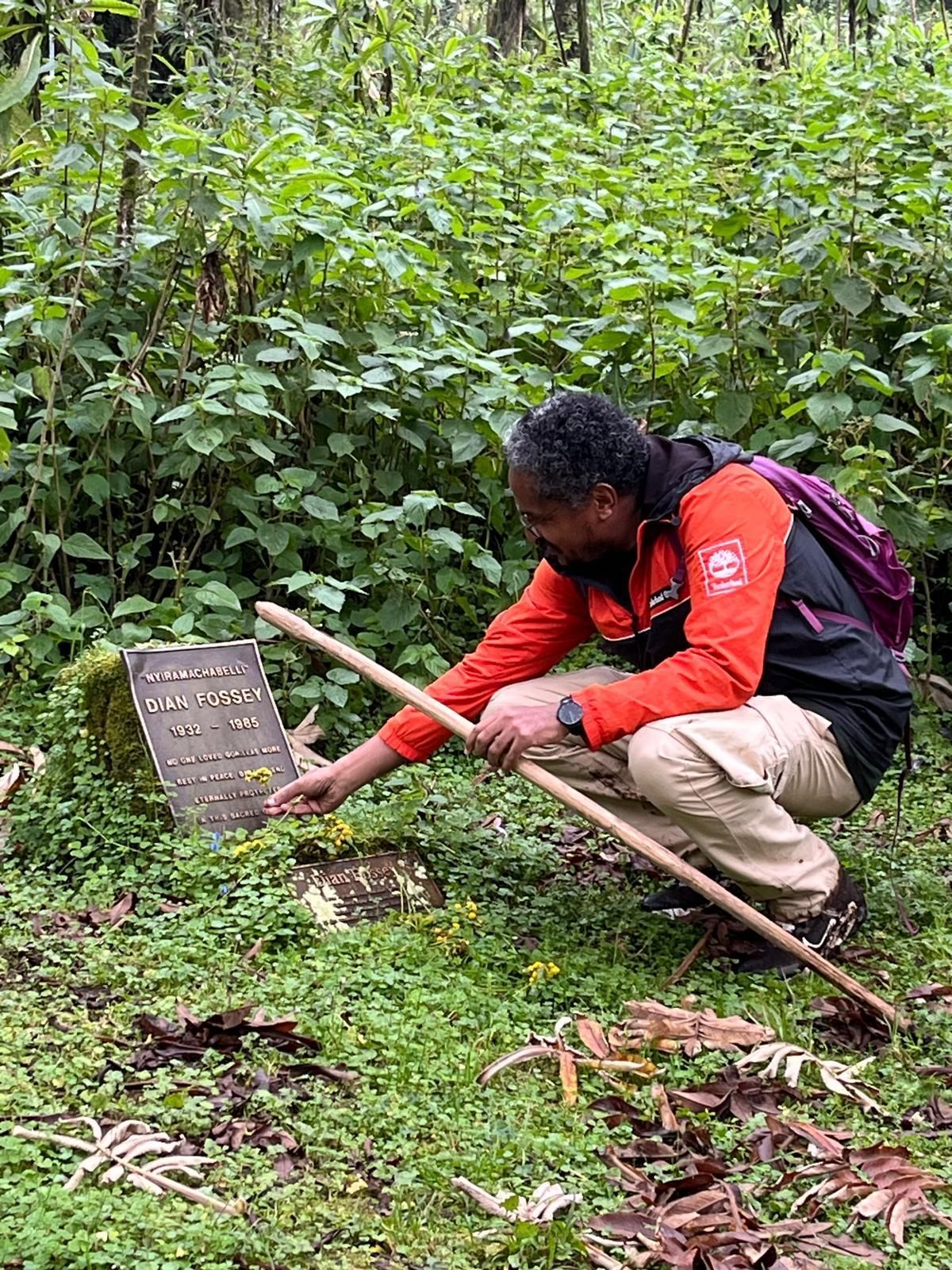
This isn't tourism. It's pilgrimage. Trek 2-3 hours through terrain Fossey walked daily for eighteen years to reach Karisoke Research Center where she lived 1967-1985 and is buried next to Digit. Foundation stones of her cabin remain. Gorilla graveyard holds 20 gorillas killed by poachers or natural causes. Walking where she walked, seeing what she saw, understanding why she stayed, why she fought, why she couldn't leave—the Virungas make sense after this hike.
Volcano Hiking
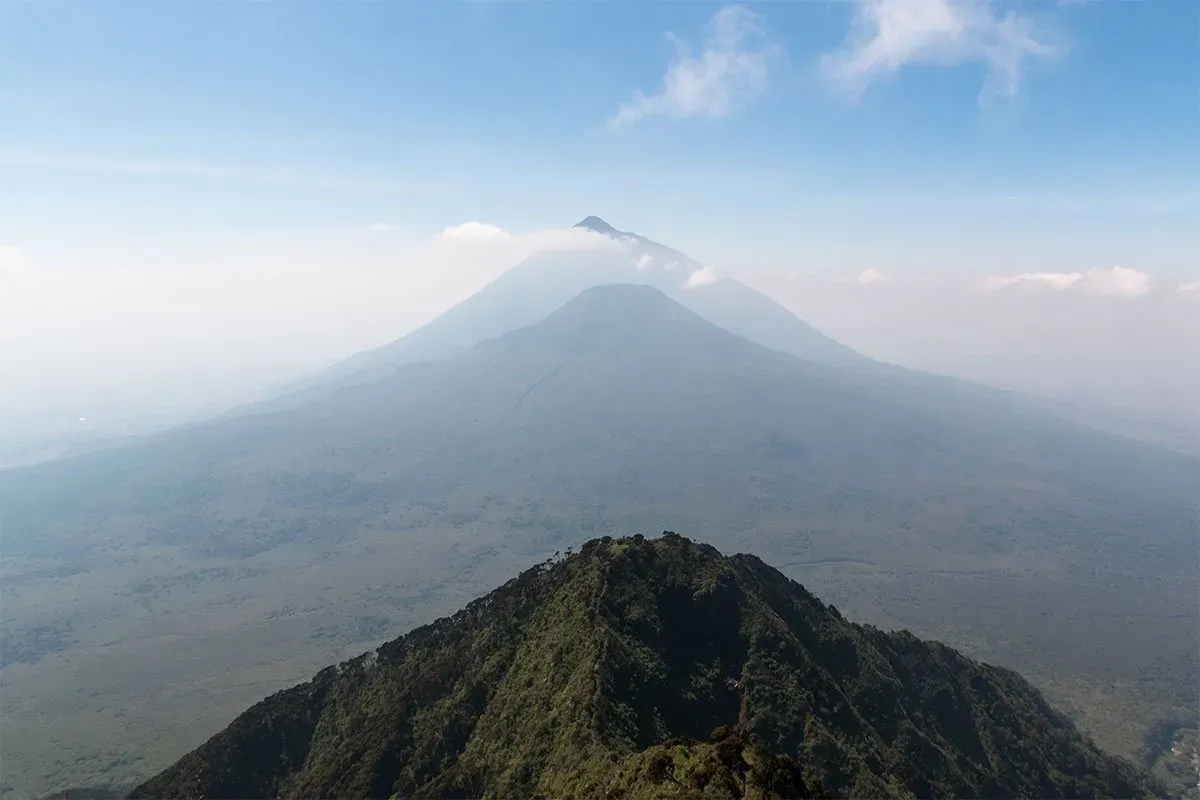
Five dormant volcanoes, ranging from half-day climbs to two-day expeditions:
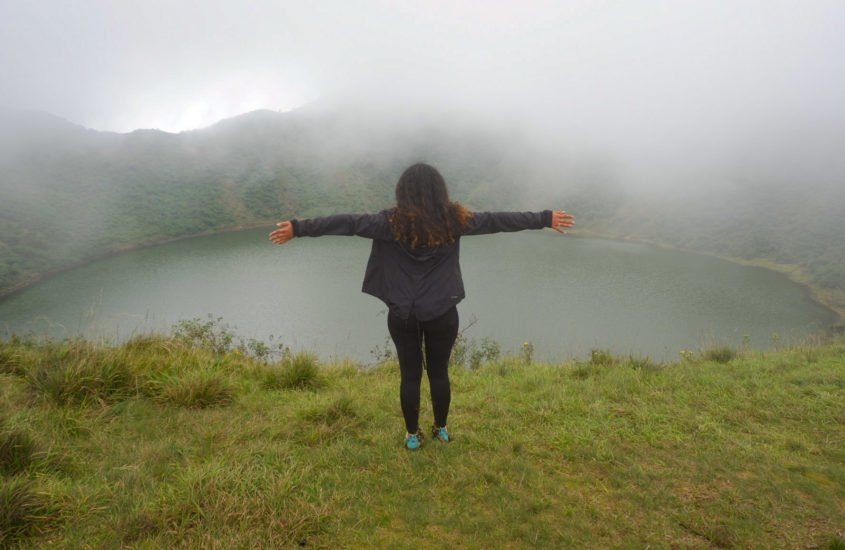
Mount Bisoke (3,711m) - Crater lake at summit, 4-6 hours up, most popular volcano hike, $75
Mount Karisimbi (4,507m) - Rwanda's highest peak, two-day trek with overnight camping at 3,700m, serious altitude, $400
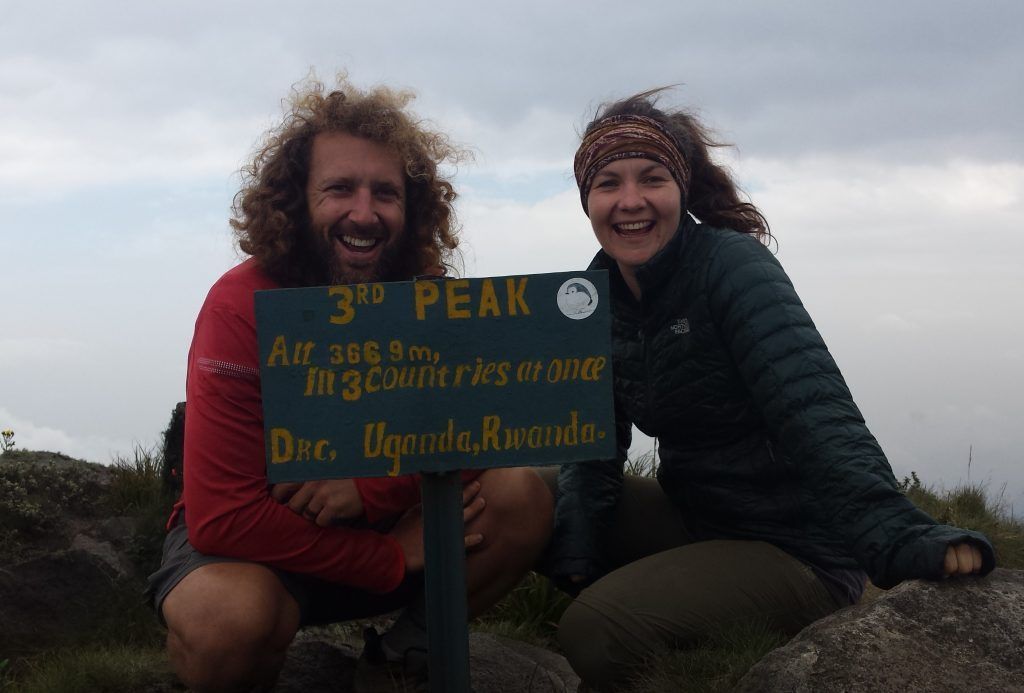
Mount Muhabura (4,127m) - 360-degree Virunga views, steep single-day climb, $75
Mount Sabyinyo and Mount Gahinga offer additional options with varying difficulty levels. Complete volcano hiking details at volcanoesnatpark.com.
Cultural & Historical Sites
Iby'Iwacu Cultural Village (Gorilla Guardians) - Founded by former poachers now earning sustainable livelihoods through cultural tourism. Experience traditional Rwandan life, Intore dance, bow and arrow demonstrations. Direct economic alternative to wildlife crime.
Musanze Caves - 65-million-year-old lava tubes, 2km accessible caves, historical refuge during conflicts.
Ellen DeGeneres Campus (Dian Fossey Gorilla Fund) - Modern research facility in Musanze continuing Fossey's legacy with 21st-century conservation science.
What Makes Volcanoes National Park Different
From Other Gorilla Destinations?
1. Access: 2.5 hours from Kigali vs 8-10 hours from Kampala
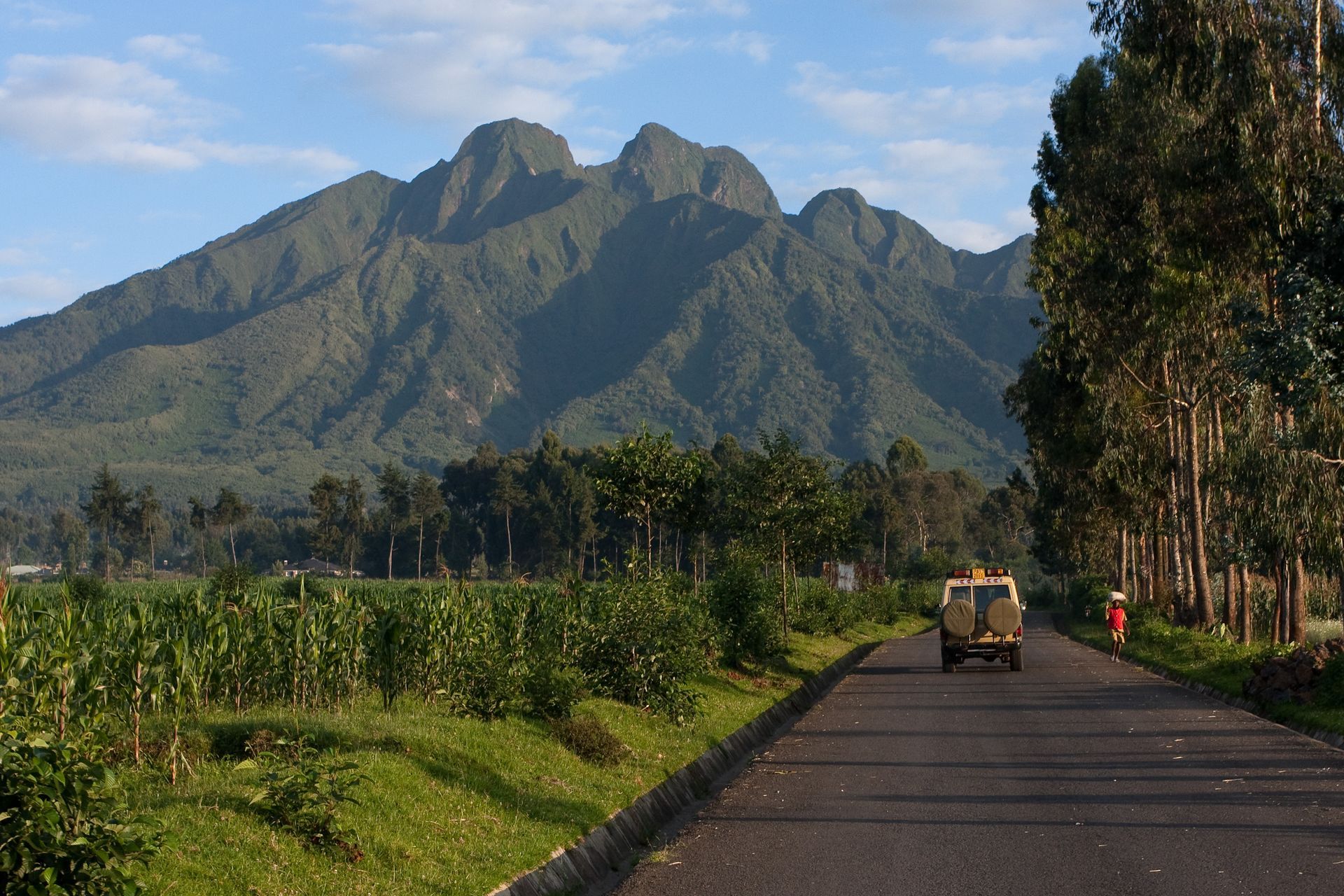
Volcanoes is 2.5 hours from Kigali International Airport on smooth paved roads. Bwindi is 8-10 hours from Entebbe/Kampala on rough, rutted roads. You arrive ready to trek, not exhausted.
2. Less dense foliage = Better visibility
Volcanoes has bamboo forests and open volcanic slopes. Bwindi is an impenetrable rainforest—thick canopy, dense undergrowth. In Rwanda there is no foliage between, you see gorillas clearly.
3. Gradual volcanic terrain = Easier treks
Volcanoes sits on volcanic slopes (2,500-4,500m) with gradual ascents. Bwindi has steep, slippery rainforest trails. Rwanda accommodates all fitness levels—families, seniors, less experienced hikers. Uganda is for the physically fit.
4. Kigali, Rwanda's capital, is still the gateway even for Uganda's treks
Even if you're trekking Bwindi, fly into Kigali. It's 4-5 hours from Kigali to Bwindi (via Cyanika or Katuna border) on smoother roads, compared to 8-10 hours from Kampala on rough roads. Most Uganda operators now route clients through Kigali.
5. One-day treks possible from Kigali
Rwanda allows same-day gorilla trekking—leave Kigali 4:30am, trek, return by evening. Uganda requires minimum 3 days (2 days just for travel), meaning extra hotel nights, meals, and time costs. For time-constrained travelers, Rwanda is the only option.
6. Book permits directly in Rwanda (No forced tour operator)
In Rwanda, book your gorilla permit directly with Rwanda Development Board—no tour operator required. You can organize a self-drive gorilla trek. In Uganda, permits must be booked through tour operators—service charges, commissions, and overhead costs start racking up. People see Rwanda's $1,500 permit and think Uganda's $800 saves money. They don't calculate the total cost.
7. Total cost: Rwanda is more affordable than Uganda ( Factoring over head costs)
Uganda permit: $800. Add mandatory tour operator fees, 3 days accommodation (vs 1 in Rwanda), extra meals, longer transport, service charges—total easily exceeds $1,800-2,000. Rwanda permit: $1,500. One night accommodation, short transfer, no forced operator fees—total around $1,600-1,700. And this can go way lower for Rwanda during the low season in if you get 50% discount on your gorilla permit. Almost every person we've spoken to who trekked Uganda from Rwanda regretted it once we broke down actual costs. They spent more due to a lack of information, checked in through Kigali International Airport. It is our hope that what we write here removes this information gap. You can contact us for more information at info@rwandasafari.com for a free consultation.
8. Shorter treks, less extreme conditions
Volcanoes treks average 2-4 hours. Bwindi treks average 2-8 hours through extreme mud, steep slopes, dense foliage, slippery conditions. Rwanda offers the gorilla encounter without braving Uganda's brutal terrain. If you want extreme adventure, trek Uganda. If you want gorillas without punishment, trek Rwanda.
9. Rwanda is premium, Uganda is Adventure
Who should trek Uganda: Adrenaline enthusiasts, backpackers, younger adventurers looking to tough out the Bwindi Impenetrable Forest. Uganda is for those who want the challenge as much as the gorillas.
Who should trek Rwanda: Seniors (Rwanda is a must), families, anyone wanting the trek without extreme mud and foliage, travelers seeking a premium experience. Rwanda delivers the gorilla encounter without the suffering.
10. Dian Fossey chose Rwanda - That says everything
The primatologist who saved mountain gorillas from extinction chose to live in Rwanda's side of the Virunga Mountains (shared by DRC, Rwanda, Uganda). She spent 18 years here. She's buried at Karisoke Research Center in Volcanoes National Park. If the woman who knew these gorillas better than anyone chose Rwanda, that tells you something.
Where Transformation Meets Conservation
Dian Fossey arrived in 1967 to study gorillas for a few months. She stayed eighteen years. She's buried at Karisoke because she couldn't leave. The Virungas claimed her completely
Every trekker exits Volcanoes National Park fundamentally altered—not by what they saw, but by what they felt. The humbling experience of standing next to a silverback. The recognition that these forests operate on rhythms completely disconnected from human urgency. The involuntary recalibration of what matters when you're face-to-face with one of the world's most endangered species.
You can visit any time you like. But you can never leave. Part of you stays in those bamboo forests at 3,000 meters. In that moment, all your thoughts went blank. In the dopamine rush descending the mountain. In the afterglow, marking every trekker's face.
Dian Fossey arrived in 1967 to study gorillas for a few months. She stayed eighteen years. She's buried at Karisoke because she couldn't leave. The Virungas claimed her completely.
They claim everyone who goes deep enough.
Need Help?
Frequently Asked Questions